


Table of Contents:
- Why Create a Gender-Neutral Wedding Timeline?
- Gender-Inclusive Alternatives to Traditional Wedding Terms
- Reimagining Wedding Timelines Through an LGBTQ+ Lens
As a loud & proud gay photographer in a wildly heteronormative industry, I am done watching queer couples feel excluded by traditional wedding customs. From terminology to traditions to timelines, nearly every element of wedding planning was created for straight couples, and straight couples only—and it’s far past time we work to change that!
So in this guide, we’re reimagining the conventional wedding timeline through an LGBTQ+ lens—creating a wedding day that affirms queer couples, rather than fitting them into the standard flow designed for hetero couples.

Why Create a Gender-Neutral Wedding Timeline?
If you’ve ever attended a hetero friend’s wedding, or even downloaded a timeline template from Pinterest, then you probably know how inherently gendered wedding timelines are.
Bridesmaids and groomsmen, fathers giving away their daughters at the altar, garter tosses… tradition after tradition exists to honor hetero couples, and leave queer couples feeling unwelcomed, rejected, and ostracized.
Unfortunately, this should come as no surprise to anyone, given how rooted in traditional, socially-approved gender roles the wedding world is as a whole—but that doesn’t mean it needs to stay that way.
So when I create wedding timelines with my couples (both queer and hetero), my biggest goal is to make every part of the day really authentic to you. And a large part of that comes when we’re able to redefine what the traditional parts of the day could look like for queer, LGBTQ+ couples!
Creating a gender-neutral wedding timeline gives you the opportunity to be more intentional about what you do and don’t want to include in your day; what feels authentic to you and what doesn’t.
My hope is that, in reading this guide, you’re reminded that there IS room for our love in this industry, too. We don’t need to force ourselves into boxes we don’t fit in: we get to forge NEW, richer, more beautiful ones. And in doing so, we give other queer couples permission to do the same.


Gender-Inclusive Alternatives to Traditional Wedding Terms
Traditions aren’t the only gendered aspect of the typical wedding timeline: the terminology is, too. Every LGBTQ+ couple or vendor has experienced the overwhelming amount of gendered language in the wedding industry—it’s the quickest way to make a queer or non-binary couple feel immediately excluded. On the flip side, using inclusive language is a really meaningful and easy way to make queer couples feel welcome right off the bat.
So, let’s go through a few common wedding terms and their gender-neutral alternatives you can use instead!
(These terms might be used in places such as your day-of schedule, invitations/RSVPs, dinner menus, venue signage, marriage vows, and more.)


Bride / Groom
Aka the two words you’ll see plastered across pretty much every wedding-related website, social media post, or resource out there. If you don’t align with the traditional “bride” and “groom” labels, it can feel triggering and disheartening to see only these two identifiers used across the wedding industry—and you might feel stuck on what to call yourselves in your invitations, timeline, etc.
(Consider this a PSA for all my wedding vendors out there who want to improve their use of inclusive language, too!)
A few great gender-neutral alternatives to “bride” and “groom” that might feel more authentic to you and your love:
- Partner
- To-be-wed
- Significant Other/ S.O.
- Spouse
- Marrier
- Nearlywed (instead of “bride/groom-to-be”)
Feel free to get creative with this and simply use the identifiers that feel right to you (if any). Maybe this looks like using the pet names you call each other, or other nicknames you have for one another!


Wife / Husband
And once you’ve officially tied the knot, here are a few ways to declare your new status as a married couple—if “wife” and “husband” don’t feel true to you:
- Spouse
- Newlywed
- Partner/ Life Partner
- Lover
- “My Person” (thank you, Grey’s Anatomy)
Or, once again, disregard the need for a formal title entirely and simply refer to each other like you normally do 🙂


Bridesmaids / Groomsmen
If the traditional wedding party structure of “bridesmaids” and “groomsmen” doesn’t feel right to you, there are a couple of other options:
- Have separate groups of people to support each of you, with more gender-neutral labels
- If you have mutual friends/family, create a joint group instead!
Here are a few labels you could use for either separate or joint groups that are much more gender-inclusive than “bridesmaids/bridal party” or “groomsmen”:
- Wedding party
- VIPs
- Wedding people
- Friends of honor
- I-Do-Crew
- Entourage
- Bridespeople/groomspeople (if you do identify with the socialized definitions of bride/groom)

Maid of Honor / Best Man
Still want to highlight one of your loved ones to serve as your go-to person leading up to the big day and/or on the big day itself, but without the gendered “Maid of Honor” / “Best Man” terms?
Consider these titles instead:
- Person of Honor
- Friend of Honor
- Mate of Honor
- Best Person
- Chief Attendant
If you want to combine your people to serve in more of a joint position, just make any of these plural—e.g. “People” of Honor instead of “Person” of Honor.
And if you don’t want the hierarchy or special roles that come with this, there’s no need to use them at all. Simply refer to your wedding party/group as a whole!


Bachelor / Bachelorette Parties
Technically bachelor & bachelorette parties aren’t a part of the actual wedding itself, but they typically precede the big day—so what should you call them if you don’t consider yourselves to be “bachelors” or “bachelorettes”?
(Also PSA that you don’t need to have separate parties—consider combining them into one big bash if you share mutual friend groups!)
A few options to consider:
- VIP Party
- Bach Party
- Bachelorx Party
- Bach Bash
- Wedding Bash
Again, feel free to get creative and silly here! In the UK these are often called “hen” and “stag” parties, and I saw somebody on a forum call their combined party a “hag” party, which I thought was perfect and hilarious.

Reimagining Wedding Timelines Through an LGBTQ+ Lens
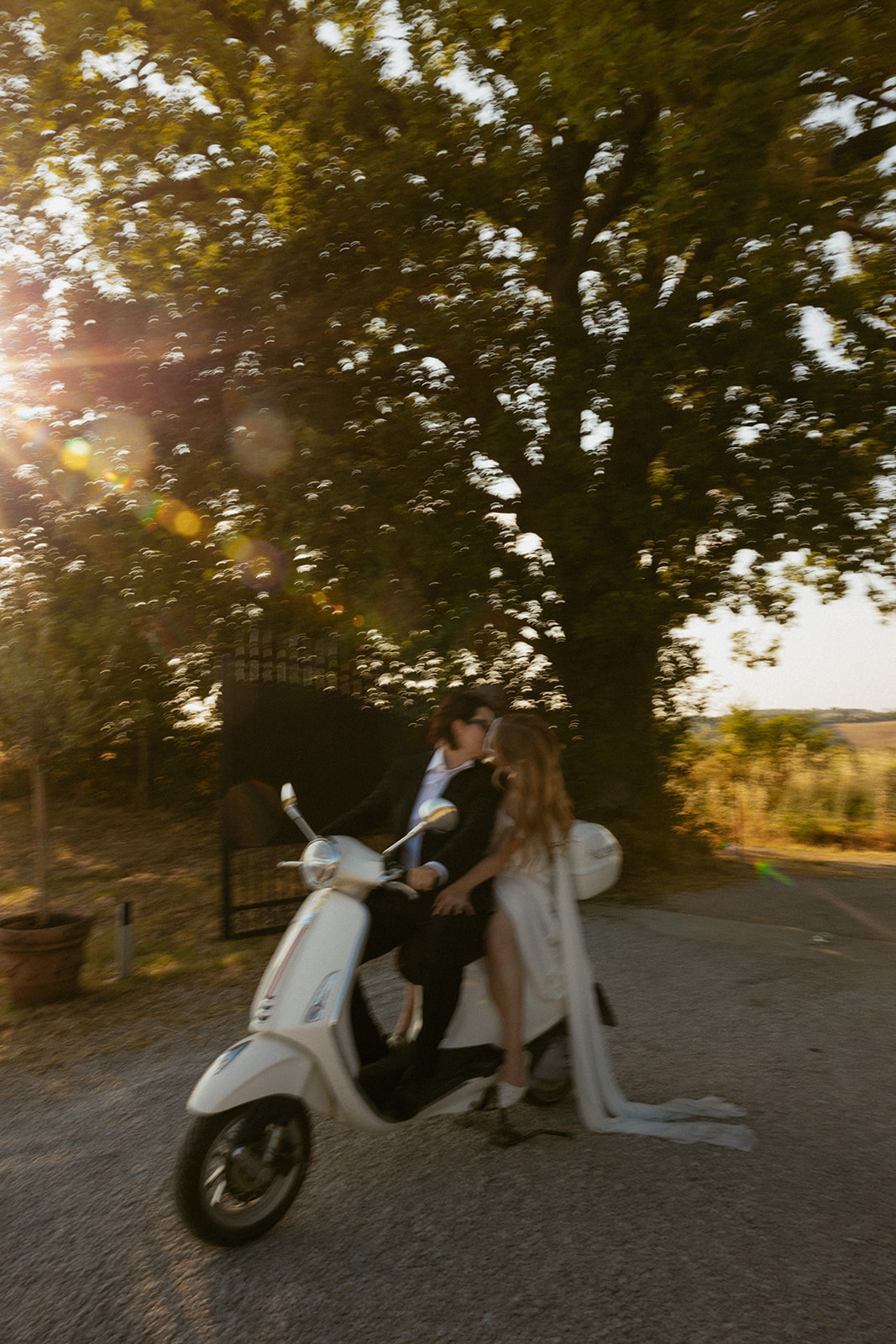
Now that you’ve hopefully found the verbiage and language to describe the different elements of your wedding day, let’s move on to what you came here for: to reimagine wedding day timelines through a queer, LGBTQ+ lens. I am so deeply excited for this. ♥️



Reimagine Getting Ready
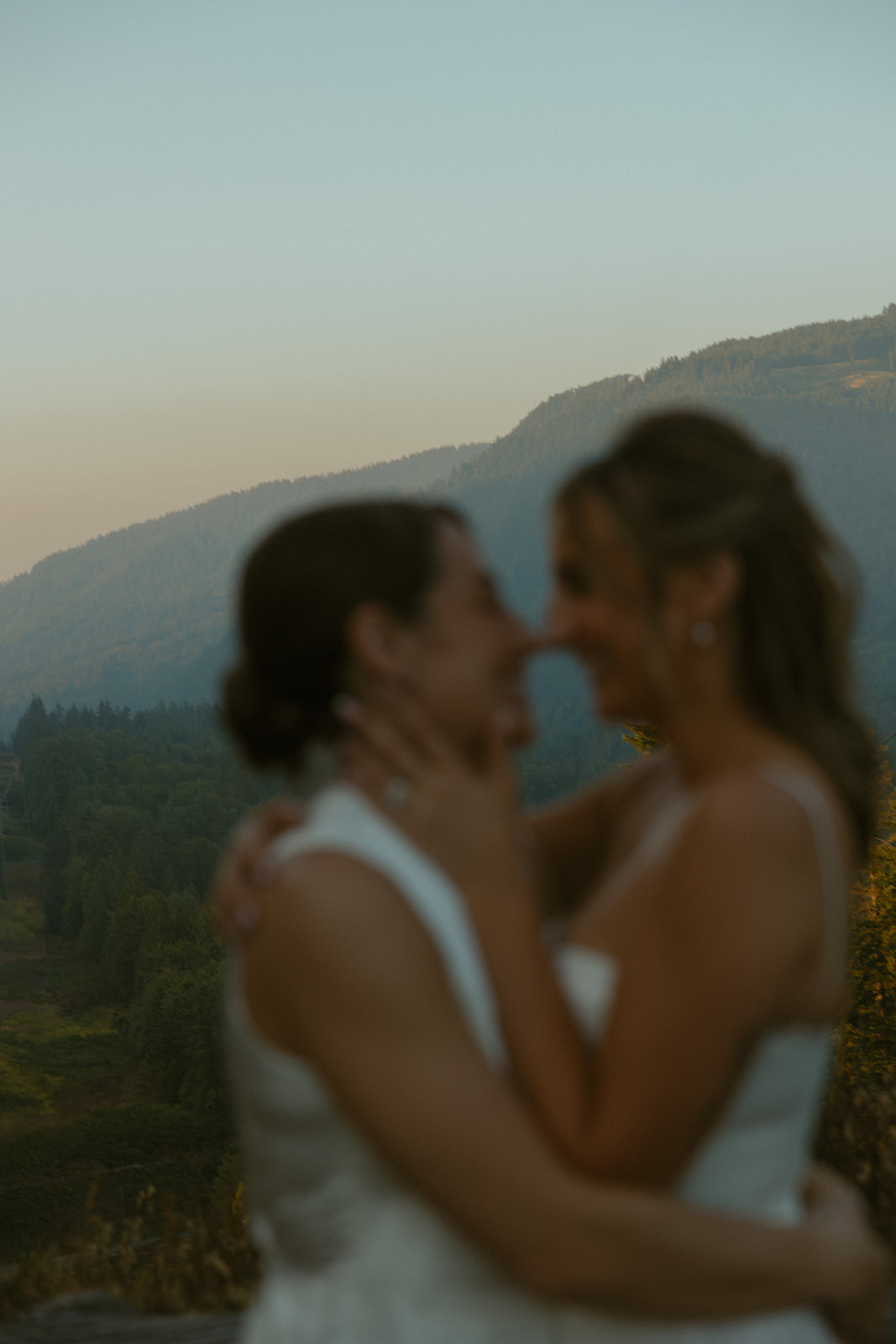
Oh man, I have beef with getting-ready spaces at most wedding venues. You’ll typically find that venues have two rooms/suites that are hella gendered and VERY catered for women: one really gorgeous, well-lit space for the “bride,” and one that’s more… dark, grungy, and small for the “groom” (if there is even a full room).
One way to avoid this is to choose a gender-inclusive wedding venue that is intentional about creating equally beautiful, welcoming, and enjoyable experiences for both people. The other is to get ready elsewhere, such as a hotel, an Airbnb, your home, etc!
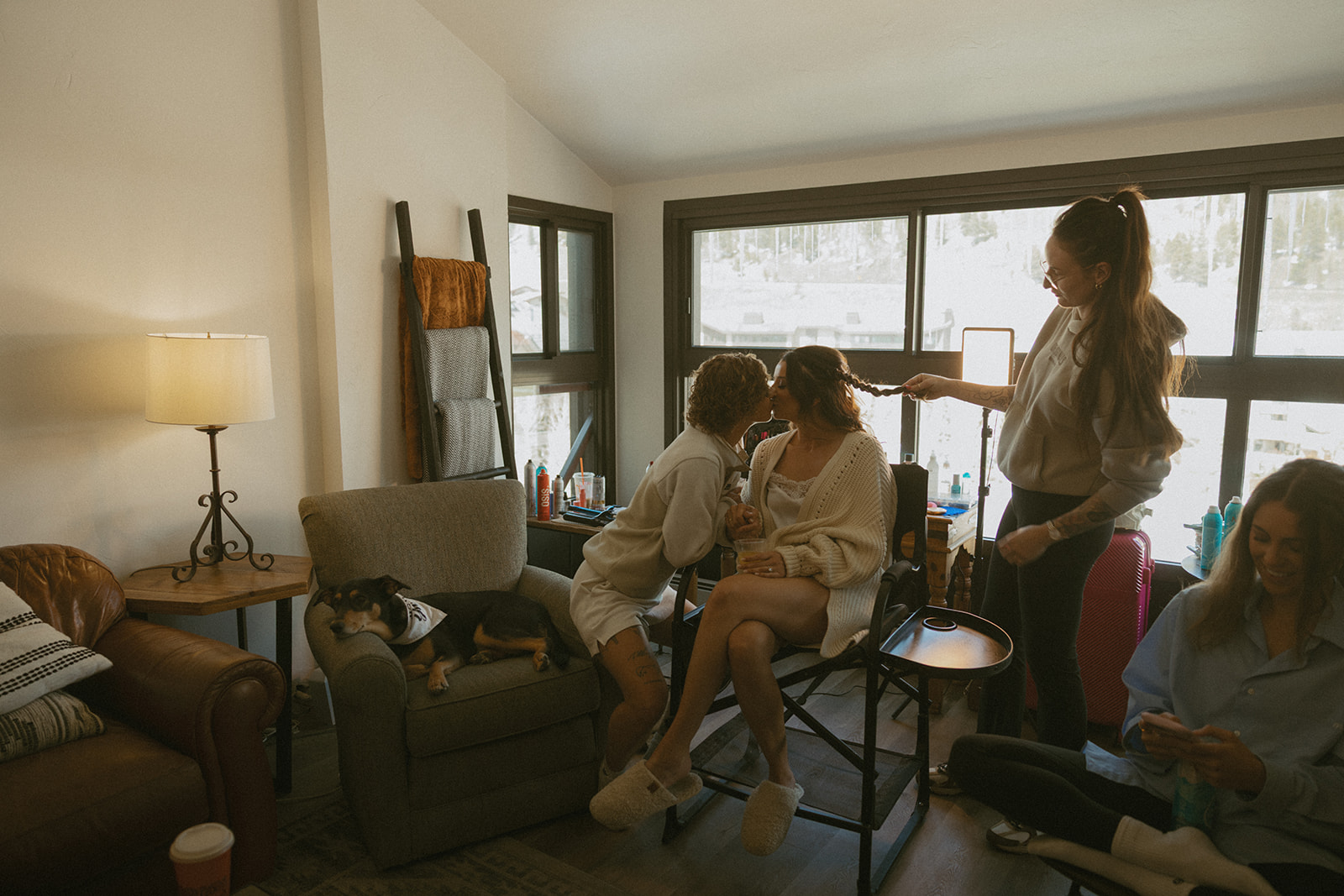
If you’d like to think outside of the box a little and reimagine the morning of your wedding outside the bounds of gender norms, here are a few ideas:
→ Fully get ready together, instead of separately
→ Get ready together all the way up until you put on your wedding attire
→ Get ready in adjoining rooms so you’re close by, but can’t see each other
→ Write your vows together, instead of in separate rooms
→ Get ready together WITH all your VIPs (how fun!)
One extra note: venue bathrooms are often gendered as well, so you might consider putting up gender-inclusive bathroom signs if the venue allows!


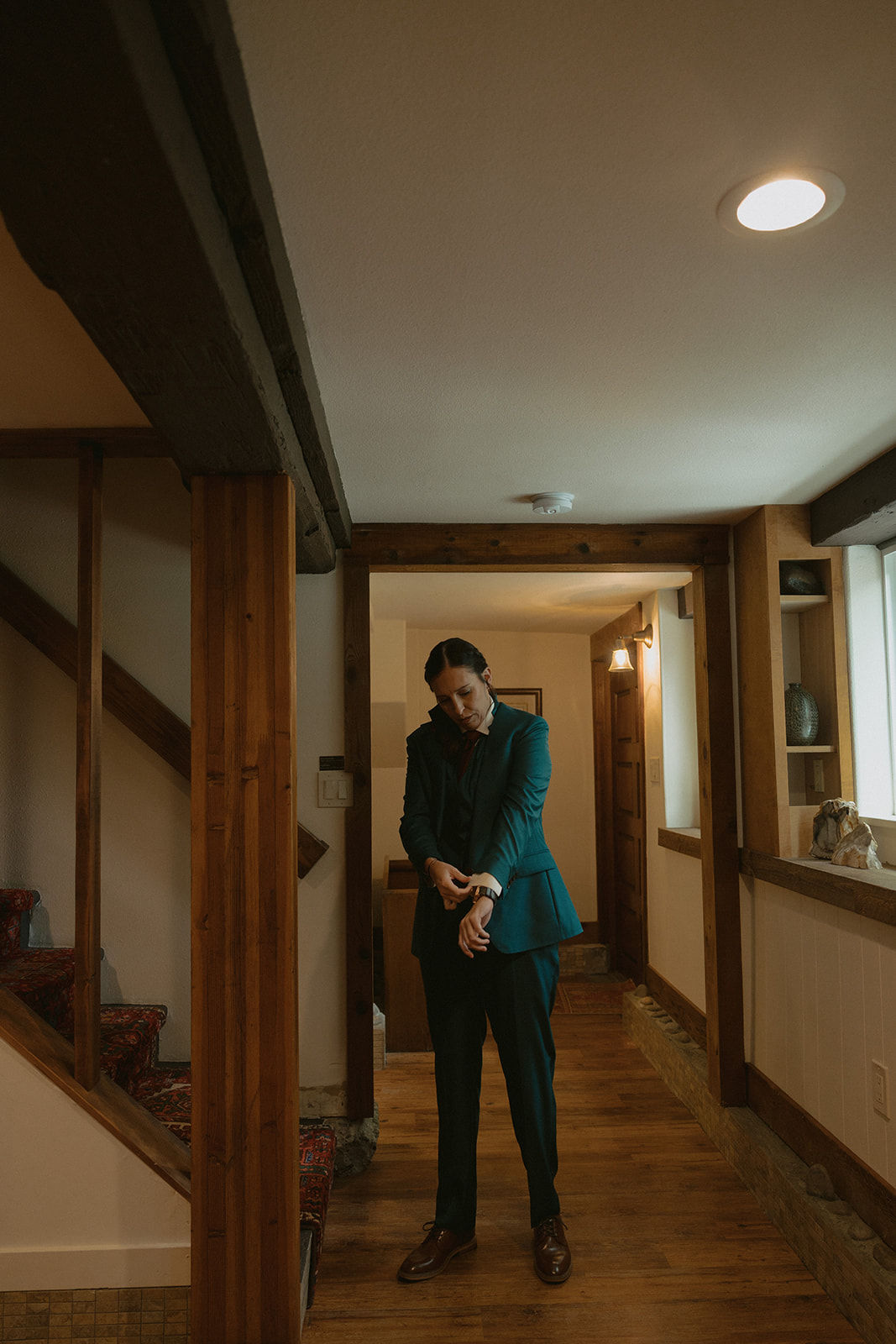

Reimagine Your Wedding Attire
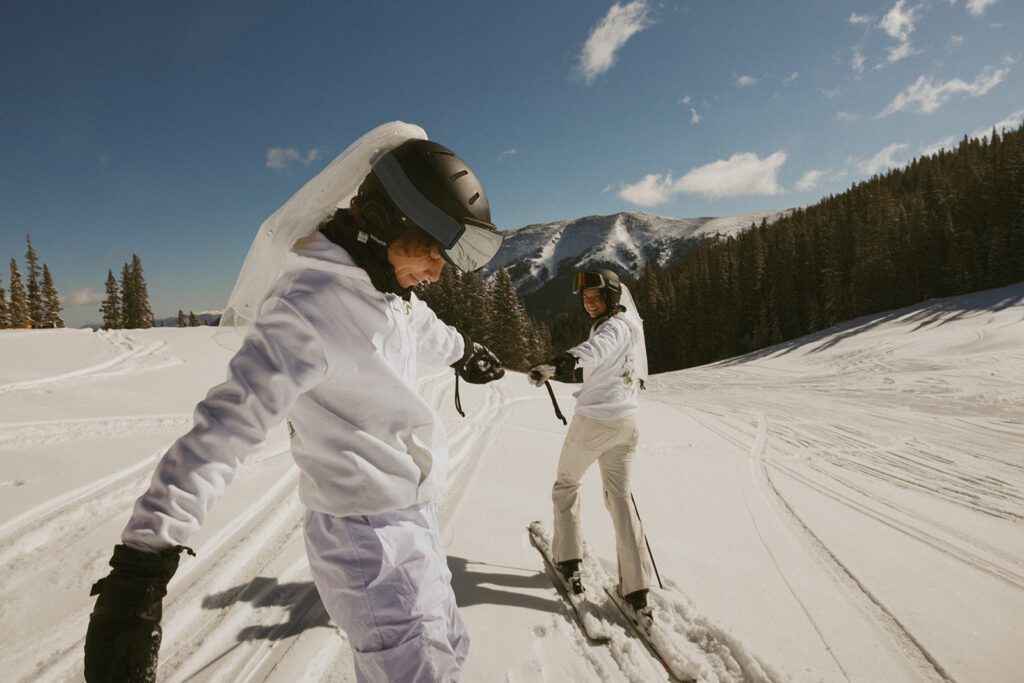
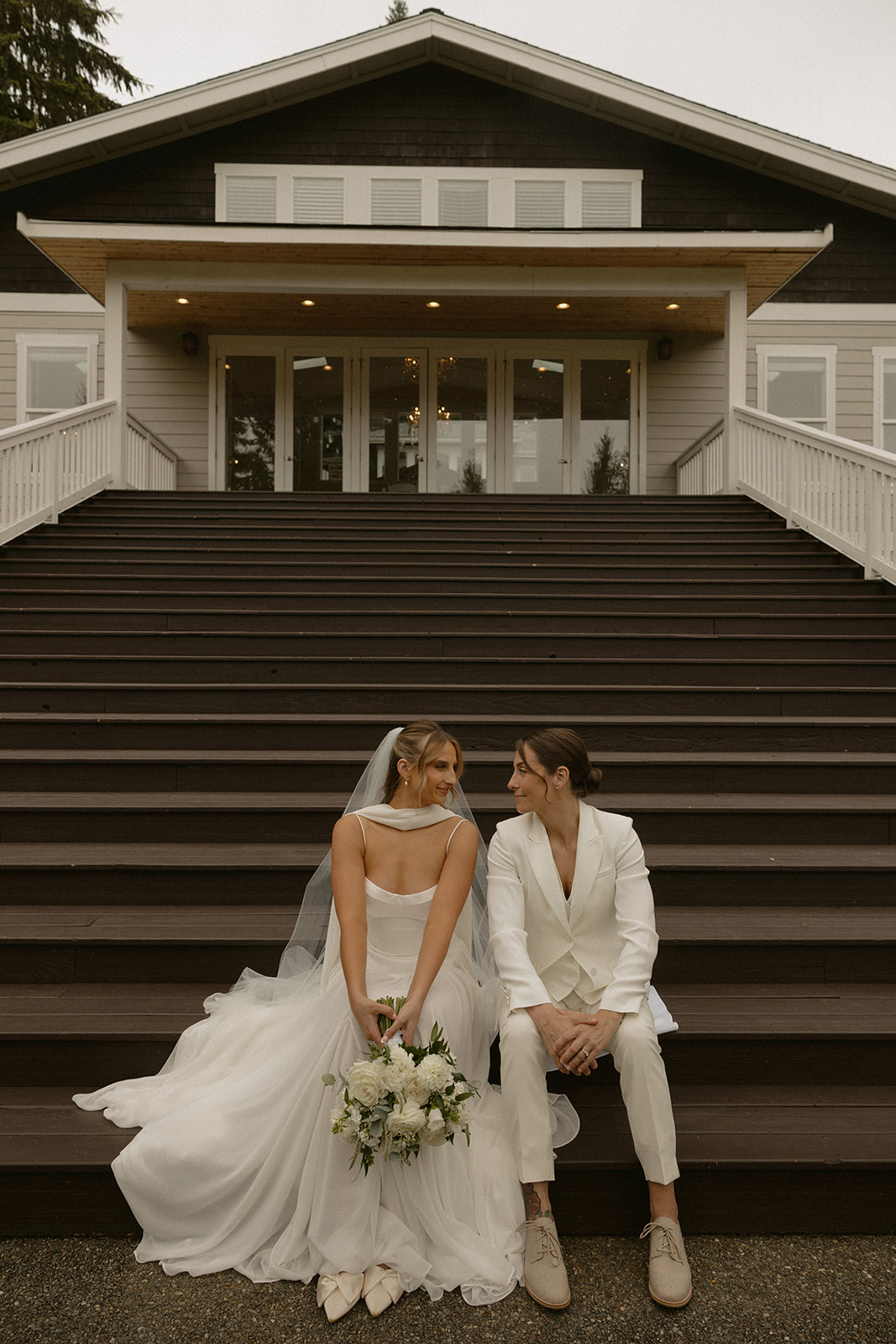
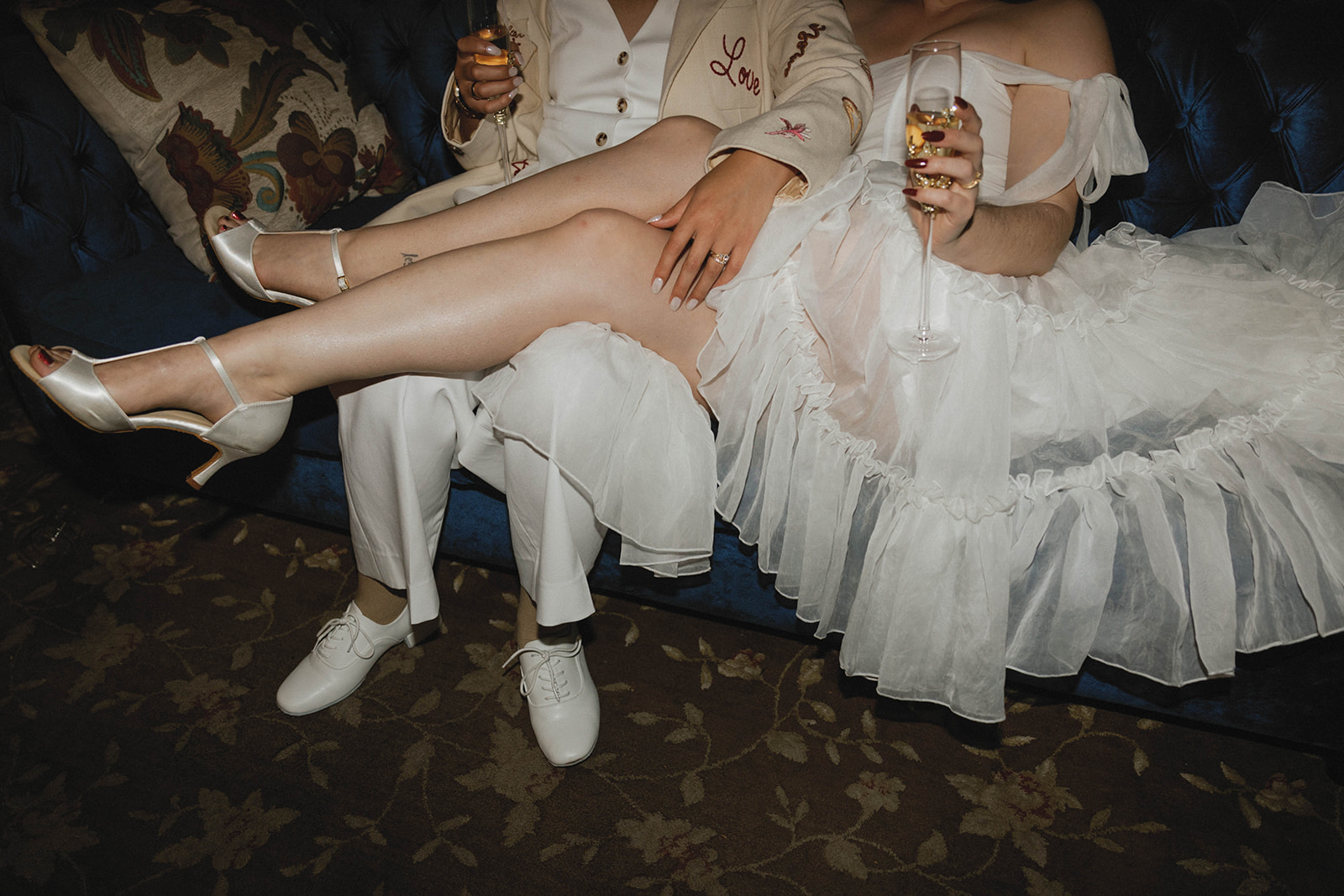
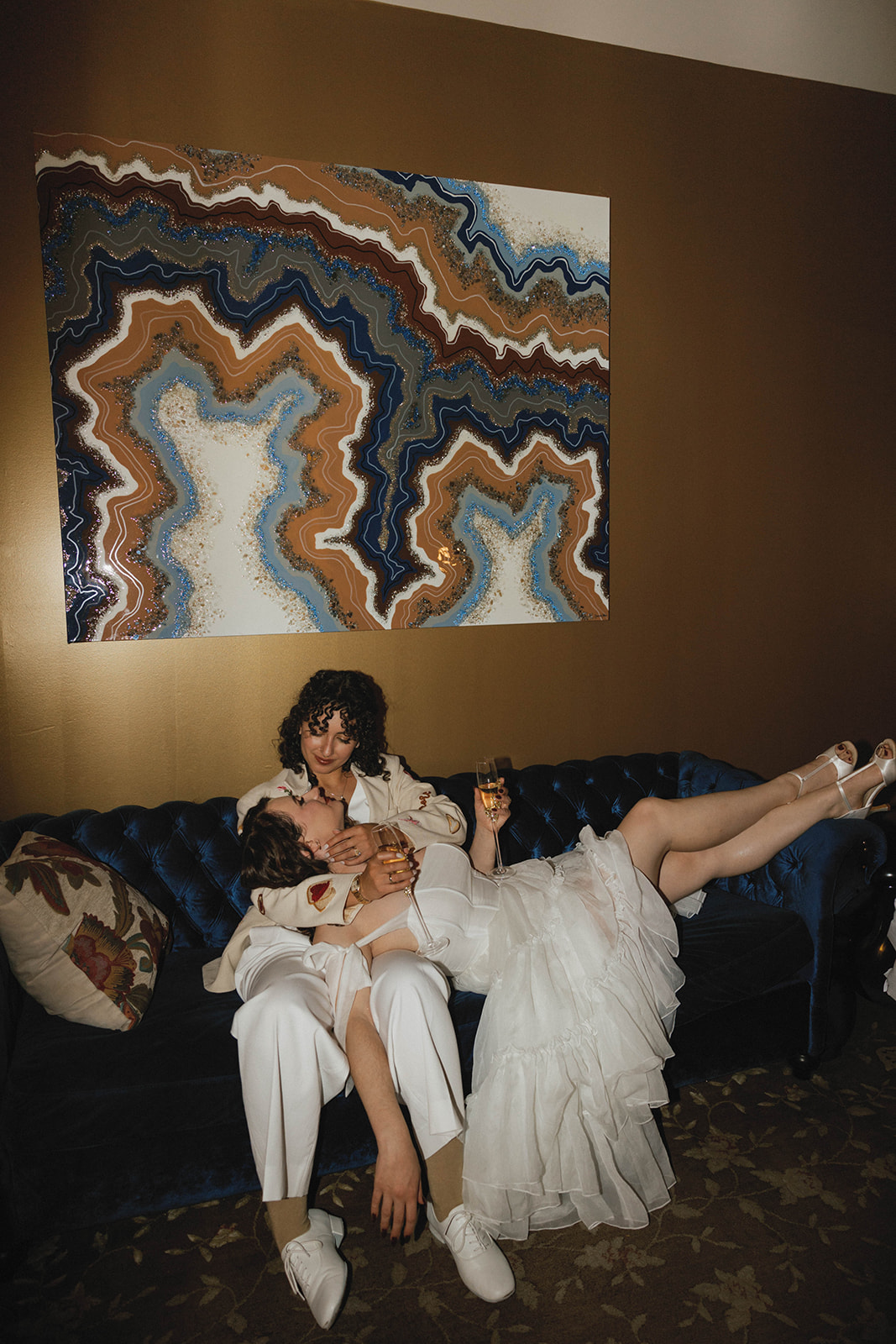
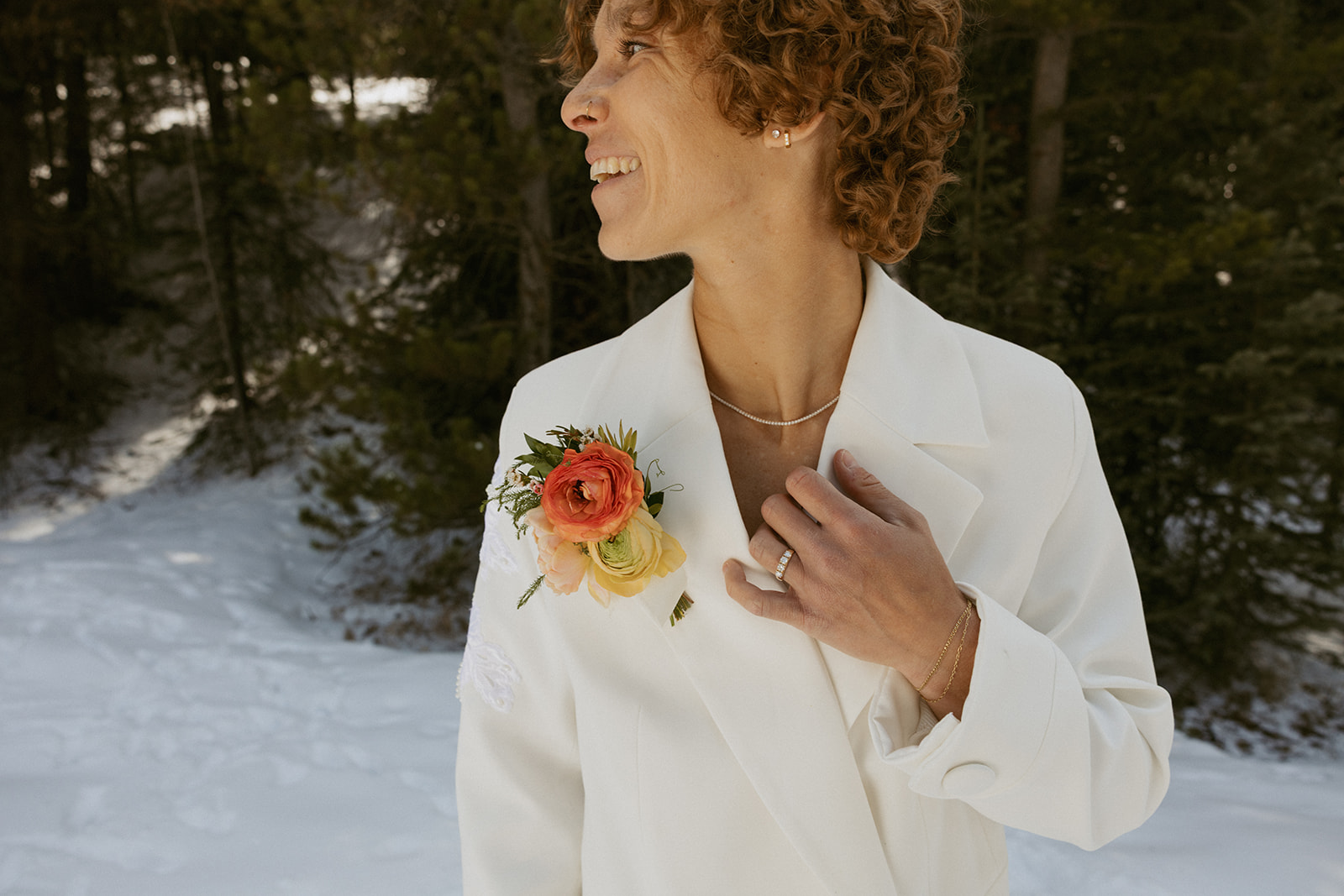
For your wedding attire, consider options that extend beyond the traditional white bridal dress and black groom’s suit. You both can wear white, neither of you can wear white, one of you can wear white and the other in something different. Anybody can wear a dress, and anybody can wear a suit—or you can wear neither, and go with your own, uniquely beautiful option! There. Are. No. Rules.
Here are some gender-neutral wedding attire options to get your ideas flowing:
→ Tailored suits
→ Jumpsuits
→ Androgynous blazers & vests with complementary shorts/pants
→ (or forgo a blazer entirely)
→ Capes, trains, or veils added to a wedding suit
Another great way to make your wedding party members feel included, regardless of their gender expression, is to let them choose their own outfits. This is a really wonderful way to show them that you prioritize their confidence, comfort, and one-of-a-kind expression over a need to match or coordinate solely for aesthetic purposes. Plus, who doesn’t love a good mix & match situation anyway?
A few of my fav brands to shop for gender-neutral wedding attire—including suits that people other than men can buy!
→ Wildfang
→ SuitShop






Reimagine First Looks
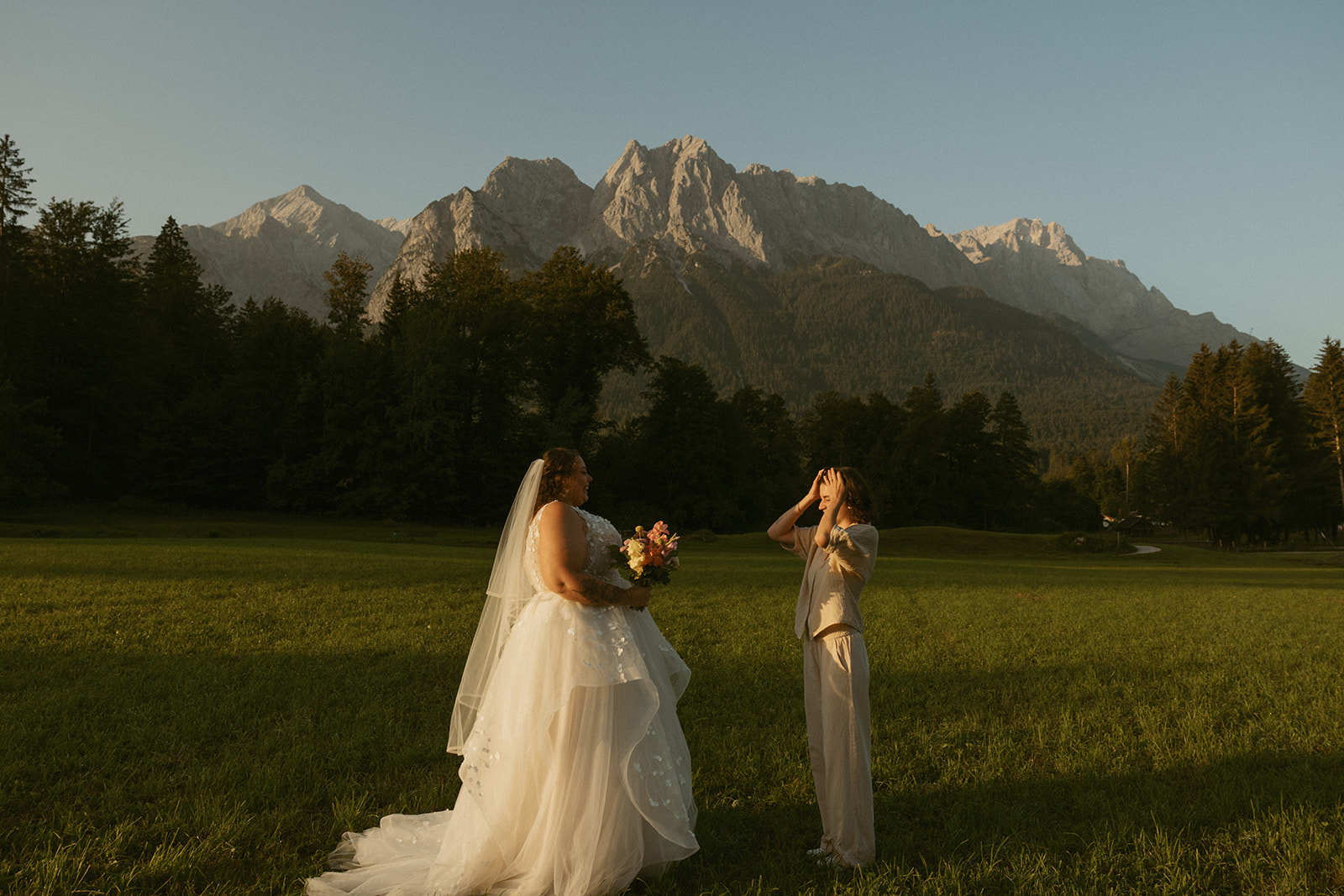
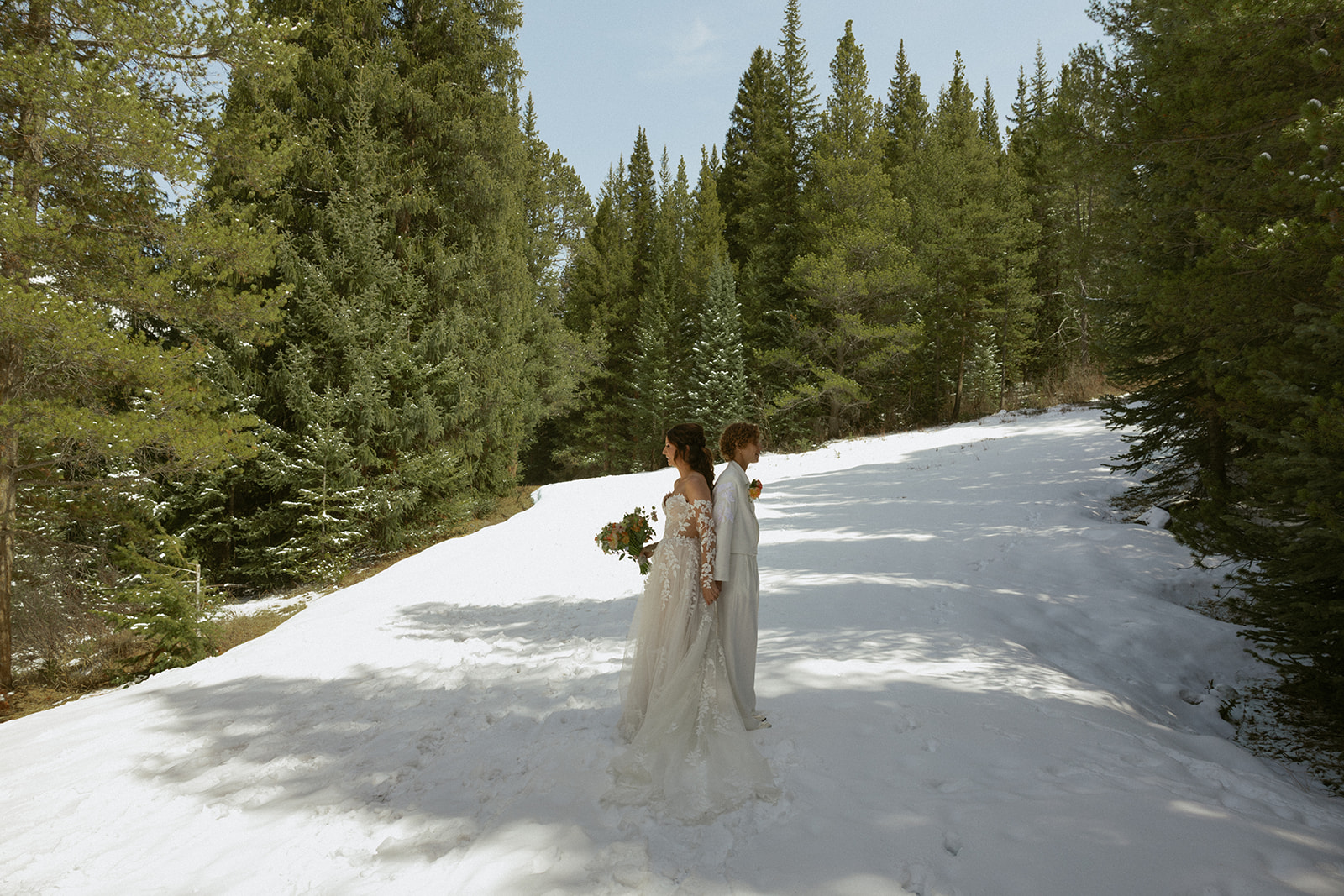
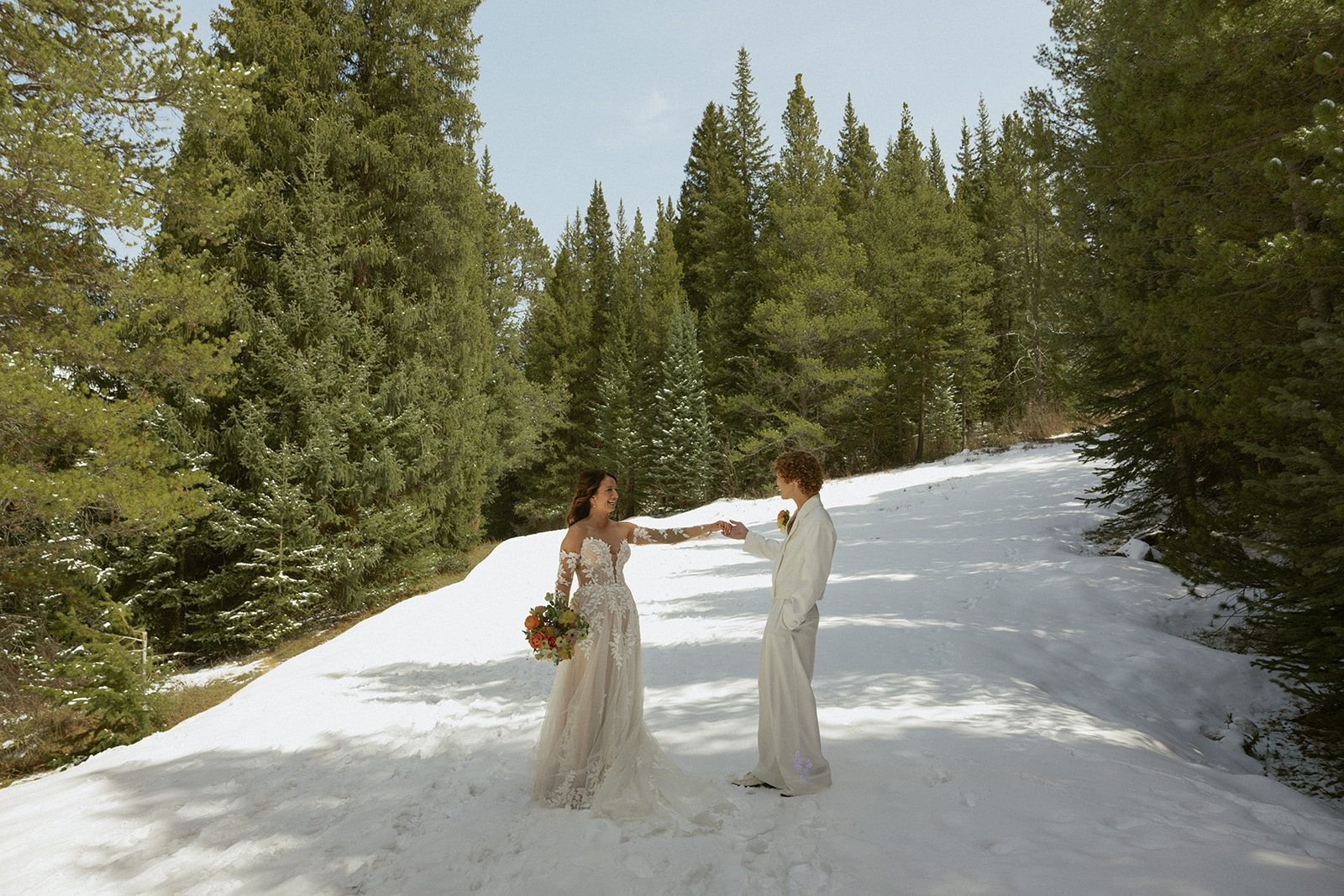
Even though first looks are somewhat non-traditional, there is somehow STILL a very traditional & hetero way you’re expected to do them.
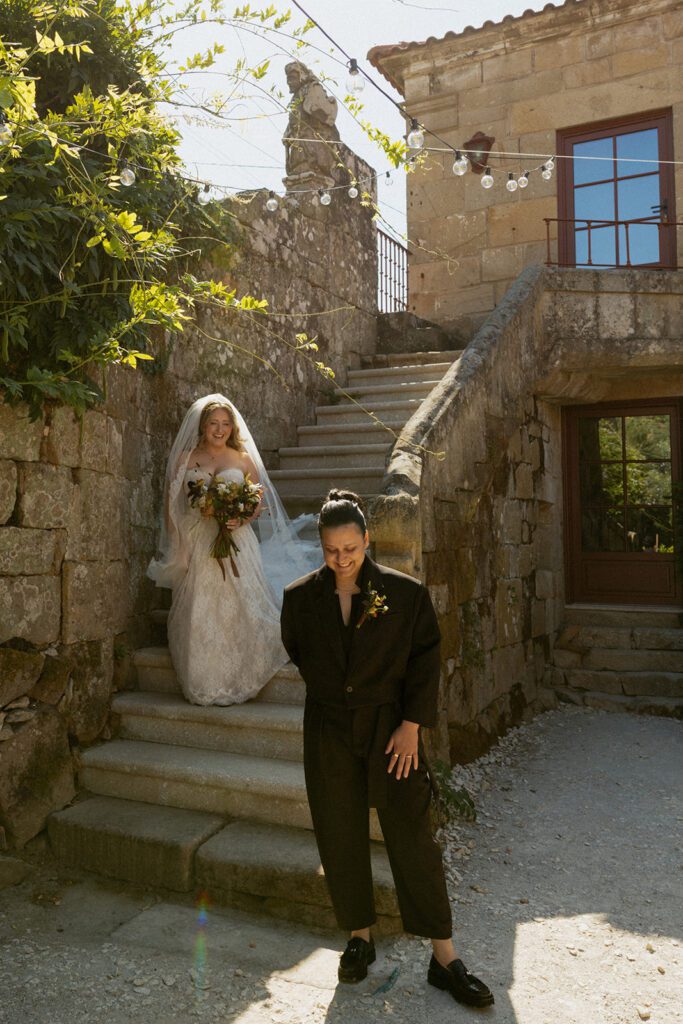
Instead of the standard route—having the guy facing away, and the bride walking up to tap his shoulder—let’s reimagine this for queer couples. It might look like that, with one partner walking up to the other, or it could look like both of you being led out with your eyes closed, standing in front of each other and opening your eyes on a countdown. You could also stand back-to-back and turn around at the same time. One of you can have a grand entrance into a room or down a staircase to meet your partner. Or, you could start in separate rooms and walk out into one space together!





Reimagine Your Ceremony
There are SO many gendered traditions incorporated into wedding ceremonies, whether we realize it or not.
I had a heartbreaking moment recently where the wedding planner put “reserved” signs on the front row of both sides of the aisle. But the family of one of the brides doesn’t support her, and was never going to be there—so that row was completely empty for the ceremony. It broke my heart and still does to this day when I think about it.
You do NOT deserve to experience any heartbreak like this on your wedding day, and I will do everything to ensure you never have to.
So here are just a few ways you can break tradition in service of a more inclusive, affirming ceremony:
→ Instead of “hiding” the “bride” away before the ceremony… greet everyone together
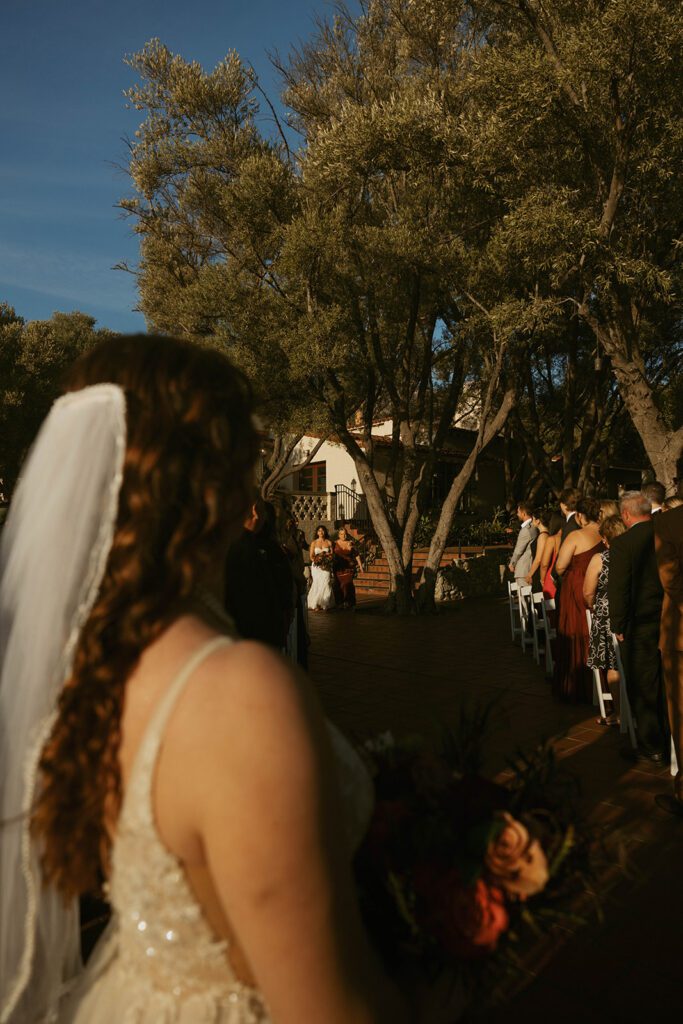
→ Instead of walking down the aisle separately… walk in together or come to the altar from opposite directions
→ Instead of being “given away” by a parent… walk down the aisle together, with both parents OR friends
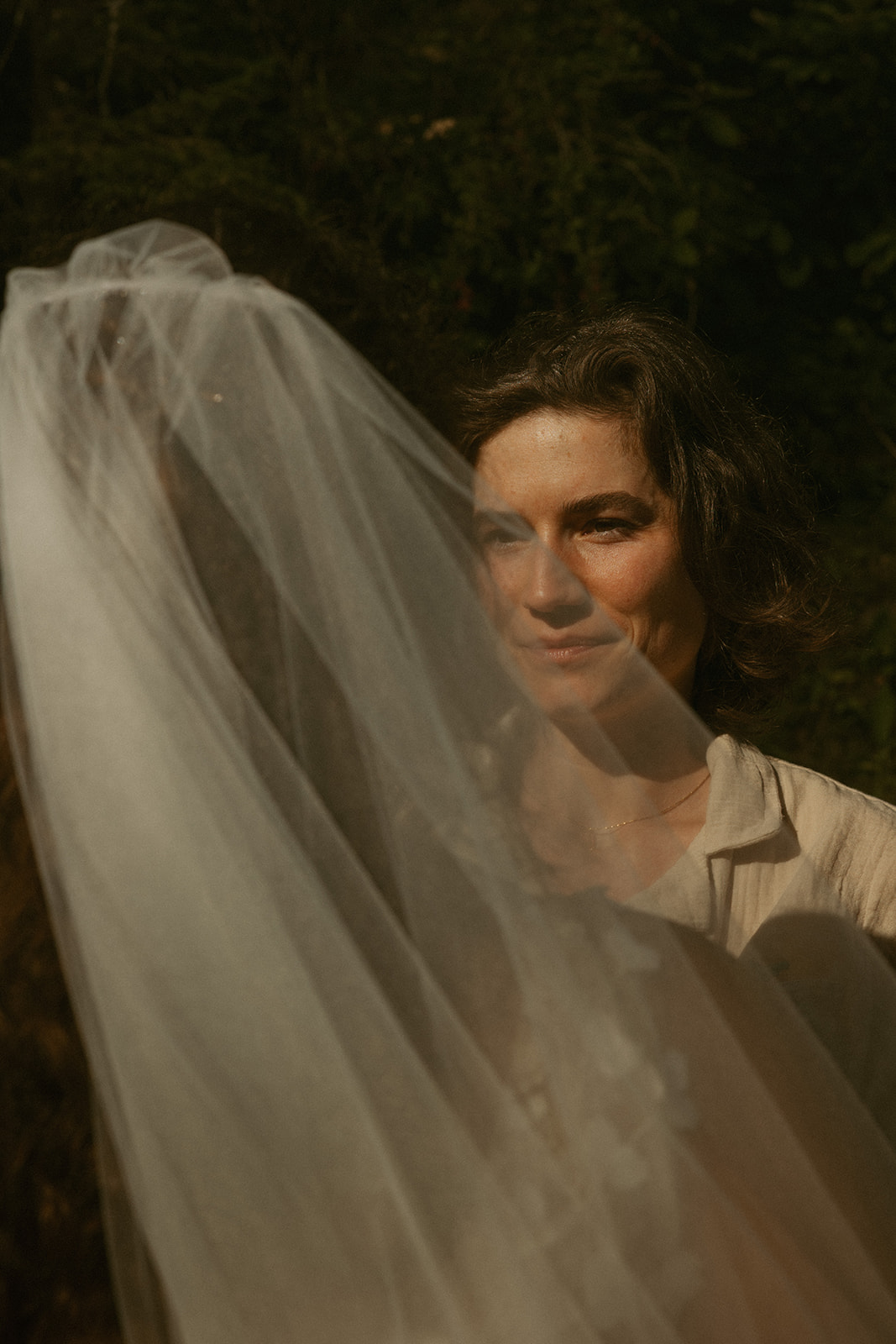
→ Instead of having your officiant ask guests to “rise for the bride” when you walk down the aisle… ask guests to stand for both of you! You can either have them stand while you each walk down the aisle separately, or if you are walking together, simply have them rise before you make your entrance.
→ Instead of traditional vows… add in rituals that would feel true to you, such as handfasting, unity tattoos, planting a tree, sand ceremonies, etc.
→ Instead of choosing one person to be the “groom” who traditionally says their vows first… rock paper scissors for it at the altar
→ Instead of splitting your aisle down the middle based on which guests are whose… consider a circular seating arrangement instead
→ Instead of hiring a religious officiant… ask a close loved one or secular officiant to marry you
→ Instead of having your wedding party stand on either side of the altar… have them stand in a joint line together
→ Instead of having a “flower girl” or boy “ring bearer”… ask a VIP or meaningful loved one to bring the rings to you & throw your flowers (or call them a “flower child,” which is so adorable!)
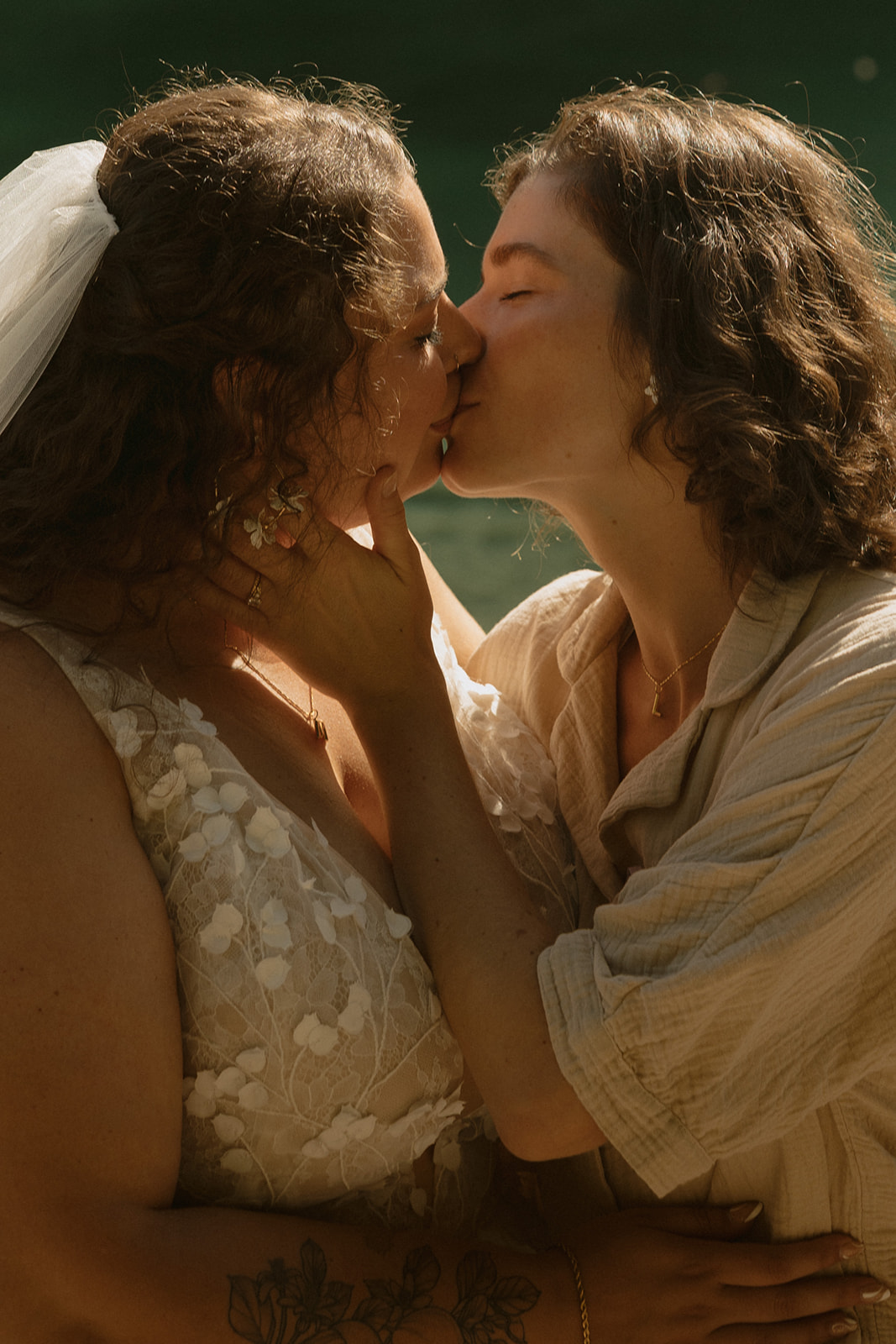
→ Instead of being introduced as “Mr. & Mrs. [man’s last name]” at the end of your ceremony… have your officiant introduce you using titles of your choice (e.g. your first names, “the newlyweds,” or you shared/hyphenated last names if you’re combining)



Reimagine Group Photos
We’ve already talked about alternatives to the traditional bridal party & groomsmen, and that also comes into play when we’re planning group photos in your timeline!
Instead of calling this part of the day “bridesmaids photos,” “groomsmen photos,” “family photos,” etc… instead, they could be:
→ Important people
→ VIP photos
→ Chosen family
→ Our people


Reimagine Your Reception
Just like wedding ceremonies, wedding receptions are brimming with outdated, gendered traditions that don’t feel authentic to MANY couples—both queer and hetero. I’ve listed out more inclusive, meaningful alternatives to some of the most popular traditions below!
→ Instead of just the “maid of honor” or “best man” giving speeches… open up the floor to all your VIPs
→ Instead of being introduced as the “new Mr. & Mrs. X” or the “husband and wife”… ask your DJ to introduce you as the “newlyweds”
→ Instead of seating the wedding party on each side of the couple… consider larger, communal tables/round tables where you can all sit together
And can we all agree that it’s time to just REMOVE the garter toss? It’s supposed to be the “groom’s” equivalent to the bride’s bouquet toss, but really, it just has weird old ties to the idea of male ownership and possession. Hard pass.


Reimagine First Dances
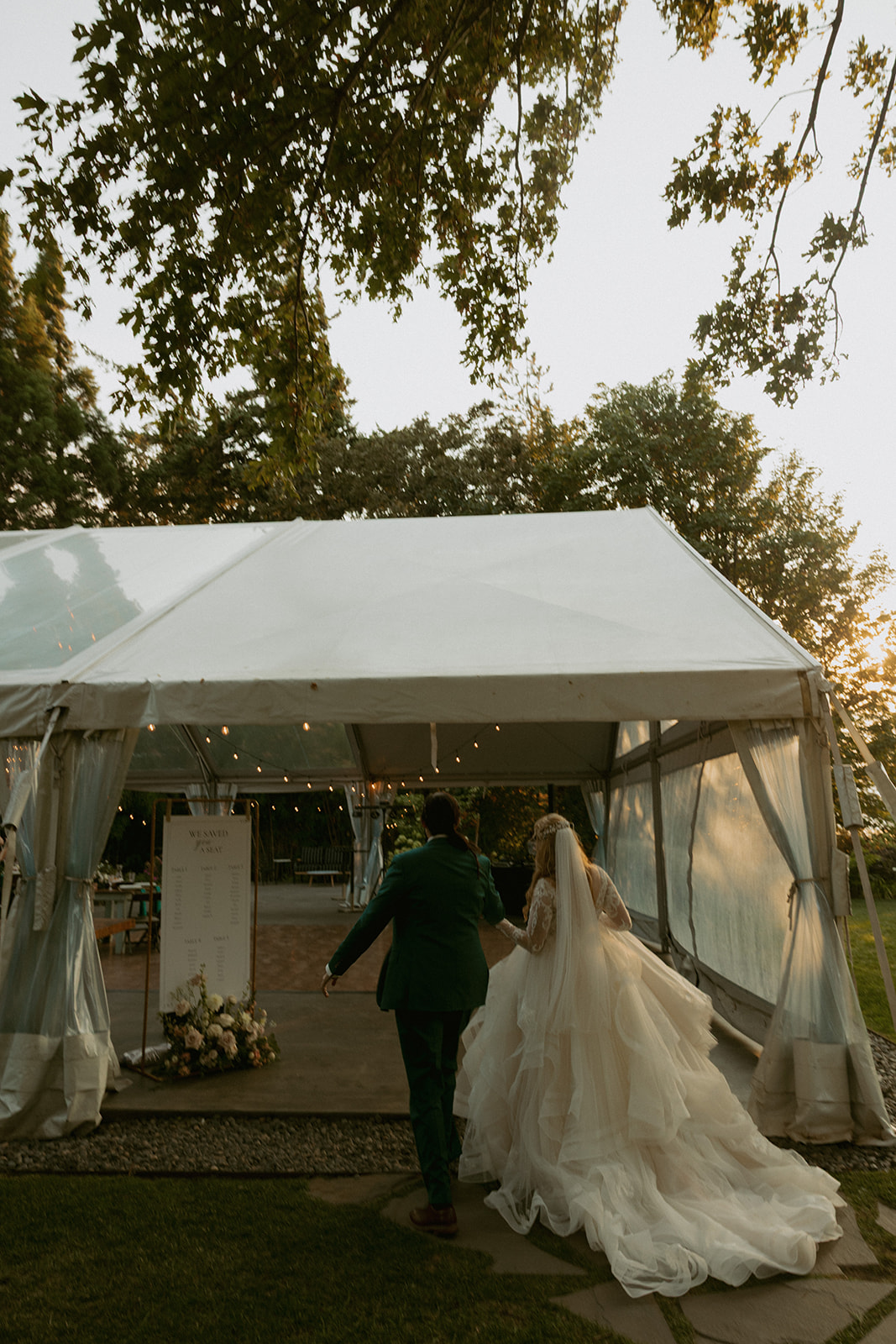
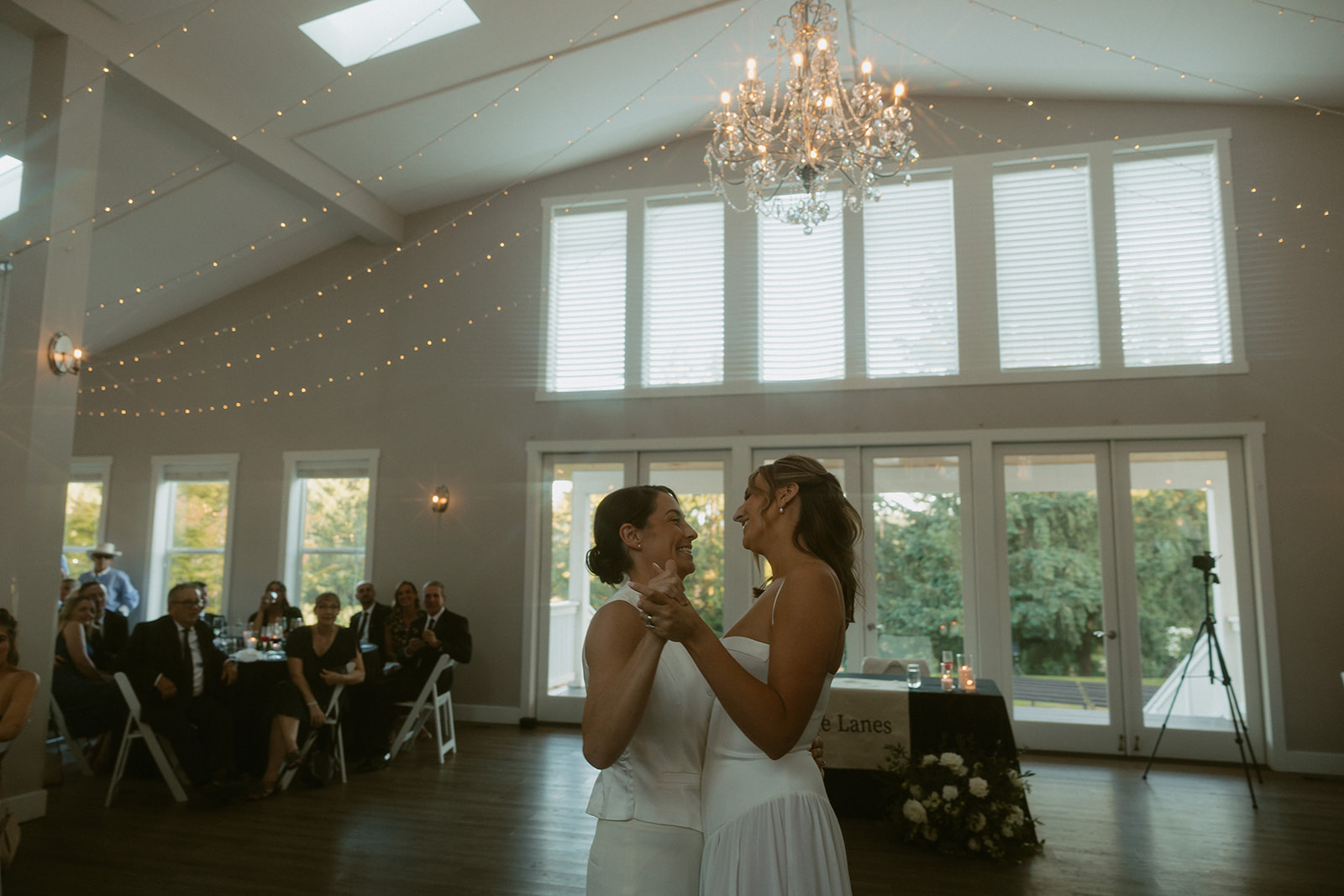
First dances are conventionally done between a bride and a groom, a bride and her dad, and a groom and his mom. Let’s wipe away all the labels & expectations that come with first dances, and just turn them into a beautiful moment to share with people you love, yeah?
If you do want to do a first dance of any kind, you can dance with each other, any parent, or invite anyone to share that moment with you.
If you don’t want to do any first dances, it’s totally okay and valid to opt out completely!
And if you do want to honor this space but don’t love the term “first dances,” try a label like “special dances” instead.
In addition, if you both don’t want to dance to individual whole songs with a parent/loved one, you can either ask the DJ to fade the song out after the first chorus, or, you can both dance with someone else at the same time to the same song! That’s been a sweet way couples have held that space without putting too much emphasis or pressure on that moment.
Might I remind you, one more time… there are no rules. This day is meant to be an authentic celebration of your love.


Looking for a Queer Photographer to Help Create Your Wedding Timeline Through an LGBTQ+ Lens?
You deserve a photographer who gets it.
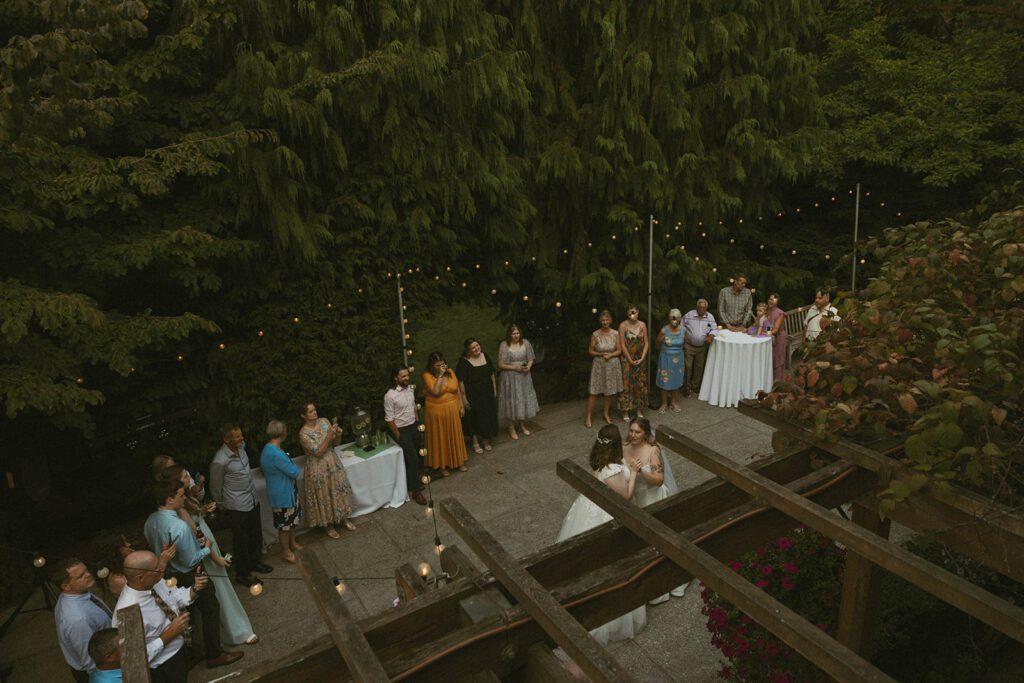
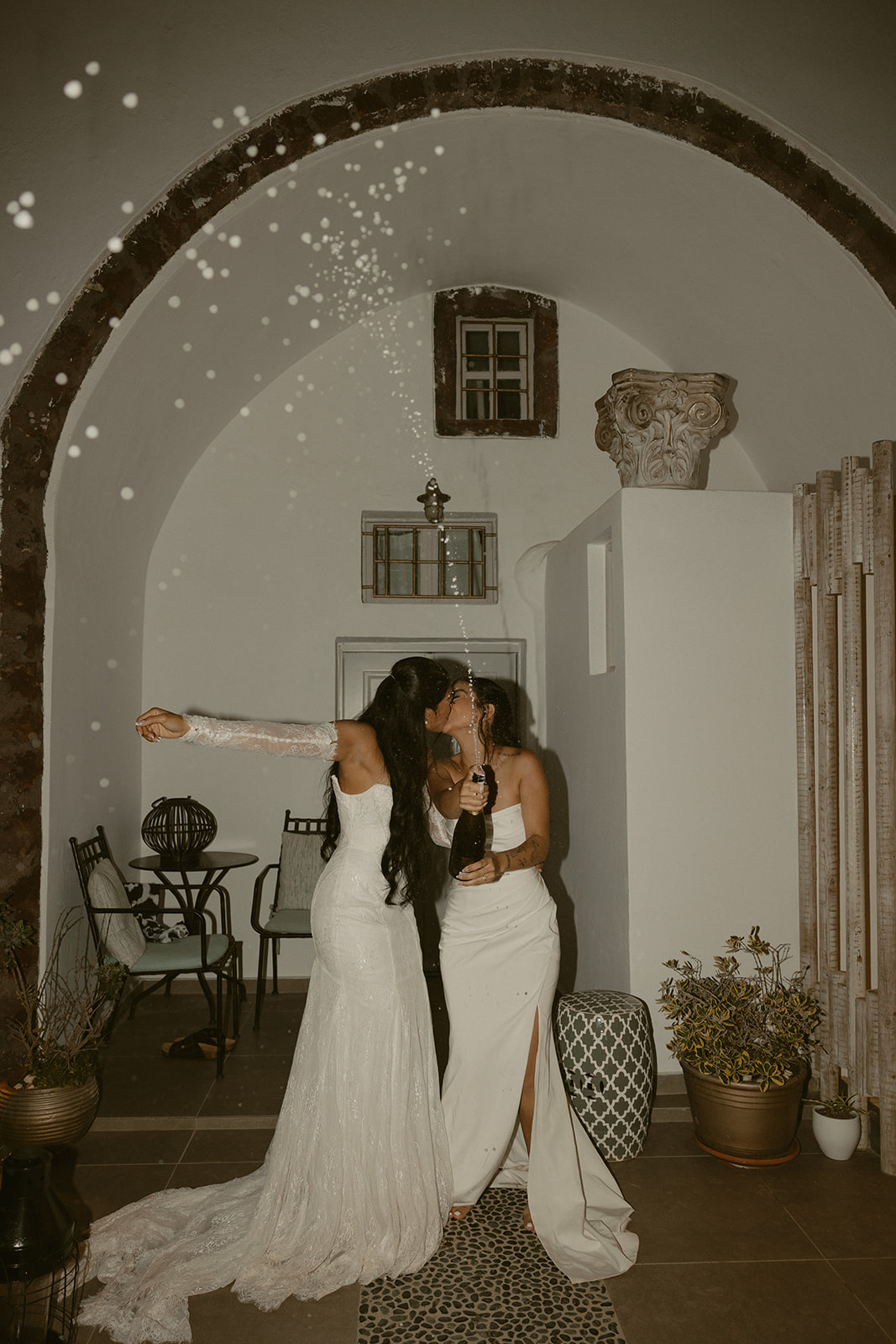
As a queer woman and photographer, I don’t just welcome LGBTQ+ couples; I am your community. I understand what it means to want to be seen—from your wedding photos to your timeline—and I create a space where you can show up exactly as you are, without explanation or performance.
If you’re a queer couple looking for a wedding day that actually represents your love, I would be so honored to be your photographer!
Inquire today, and together, let’s craft a wedding day that makes you feel safe, seen, & celebrated.





Comments
Comments